3D+
- Technique
- Credential phishing Authorization phishing
- Sub-technique
- AitM Device code phishing
- Targeted platforms
- Google Microsoft
- Also tracked as
- 3DP3D Cookies
Updated · First published
Current breakthrough rate
Moderate
- Jul 2026: Moderate
- Aug 2026: Moderate
- Sep 2026: Moderate
- Oct 2026: Moderate
The 3D+ phishing kit provides a full suite of MFA bypass phishing tools plus other attacks, including:
- DOM mirror AiTM phishing targeting Google Workspace
- Service-worker reverse proxy targeting Microsoft 365 as well as Yahoo, AOL and others
- Device code phishing targeting Microsoft 365
- Malware download lures
It has been built using a collection of different open source projects to provide key areas of functionality. For example, service-worker reverse proxy built on Ultraviolet, DOM mirroring based on the morphdom and diffDOM libraries, and device code phishing abuse with GraphSpy.
Push has tracked the appearance of the 3D+ phishing platform back to January 2026. It started seeing wider usage from around May 2026 with significant increases in September and October 2026.
URL patterns
Common landing page URL patterns have included:
/q/<40 chars>- AiTM phishing "quick link". Since October 2026 this appears to have been phased out for more complex link structures./gp/56 chars>- Device code phishing (aka "graph phishing")./s/<xor url>- Ultraviolet XOR-encoded proxy routes. Earlier versions primarily before March 2026./wg/<token>- Generic webmail phishing ("webmail generic")./pl/<token>- CAPTCHA-gated malware delivery ("payload landing").
Network traffic
Google AiTM: DOM mirror
The Google AiTM phishing component works by running a remote browser that drives the
real Google login page. Its whole DOM is sent over the network for display in the victim's
browser. The socket.io.js, morphdom.js and domdifferscript.js JavaScript libraries
are loaded by the phishing page to establish this connection and set up the DOM mirroring.
The full serialised DOM is sent from server to client in the domupdate message. It removes
all <script> elements, inlines computed CSS as <style data-proxy-harvest="1">, rewrites
asset paths to /getContent?url=<sha256>.dat, and replaces iframes with /iframeScript.html.
Victim input is sent as keypress, beforeinput-event, inputchange, click, paste-event,
selectionchange and autograb-email events that are sent up to the remote browser to be relayed
to Google.
Microsoft AiTM: Ultraviolet/Scramjet proxy
For Microsoft 365 targets, the phishing page registers an Ultraviolet (/sw.js, /uv/uv.sw.js) or
Scramjet (/scramjet-sw.js) Service Worker to proxy the authentication flows. Proxied requests are
sent to the Ultraviolet TompHTTP Bare server by the service worker:
GET /bare/v1/ HTTP/2
x-bare-host: login.microsoftonline.com
x-bare-port: 443
x-bare-protocol: https:
x-bare-path: /?auth=2&sso_reload=true?uv_qid=...&_qlframe=1
x-bare-forward-headers: ["accept-encoding","connection","content-length"]
x-bare-headers: {"accept":"text/html,...","sec-ch-ua":"...","user-agent":"...",...}
A set of request modifier rules are injected into the proxy to force settings that are favourable to the attacker:
office365-fido-disable- SetsisFidoSupportedinPOST /common/GetCredentialTypetofalseso as to downgrade MFA.office365-login-stay-signed-in/office365-kmsi-remember- Forces a persistent session cookie.office365-remember-mfa- SetsrememberMFAtotrue.
Device code phishing
The device code phishing component was built using the open source red team tool GraphSpy as disclosed by strings in its HTTP responses.
POST /api/graph/device-start HTTP/2
Content-Type: application/json

{"template_id": "landing", "onedrive_scope": true, "quick_link_id": "<56-char>", "auth_mode": "cookie"}
{
  "success": true,
  "poll_id": "<32-hex>",
  "verification_uri": "https://microsoft.com/devicelogin",
  "user_code": "<code>",
  "interval": 5,
  "expires_in": 899,
  "scope_mode": "graphspy_device_prt",
  "oauth_client_id": "29d9ed98-a469-4536-ade2-f981bc1d605e",
  "app_display_name": "Microsoft Device Registration"
}
After displaying the malicious device code to the user, it begins polling to check if it has been used to authorize access to the victim's account:
GET /api/graph/device-poll?poll_id=<32-hex>
→ {"status":"pending","interval":5,"graphspy_status":"POLLING"}
3D+ Suite admin panel
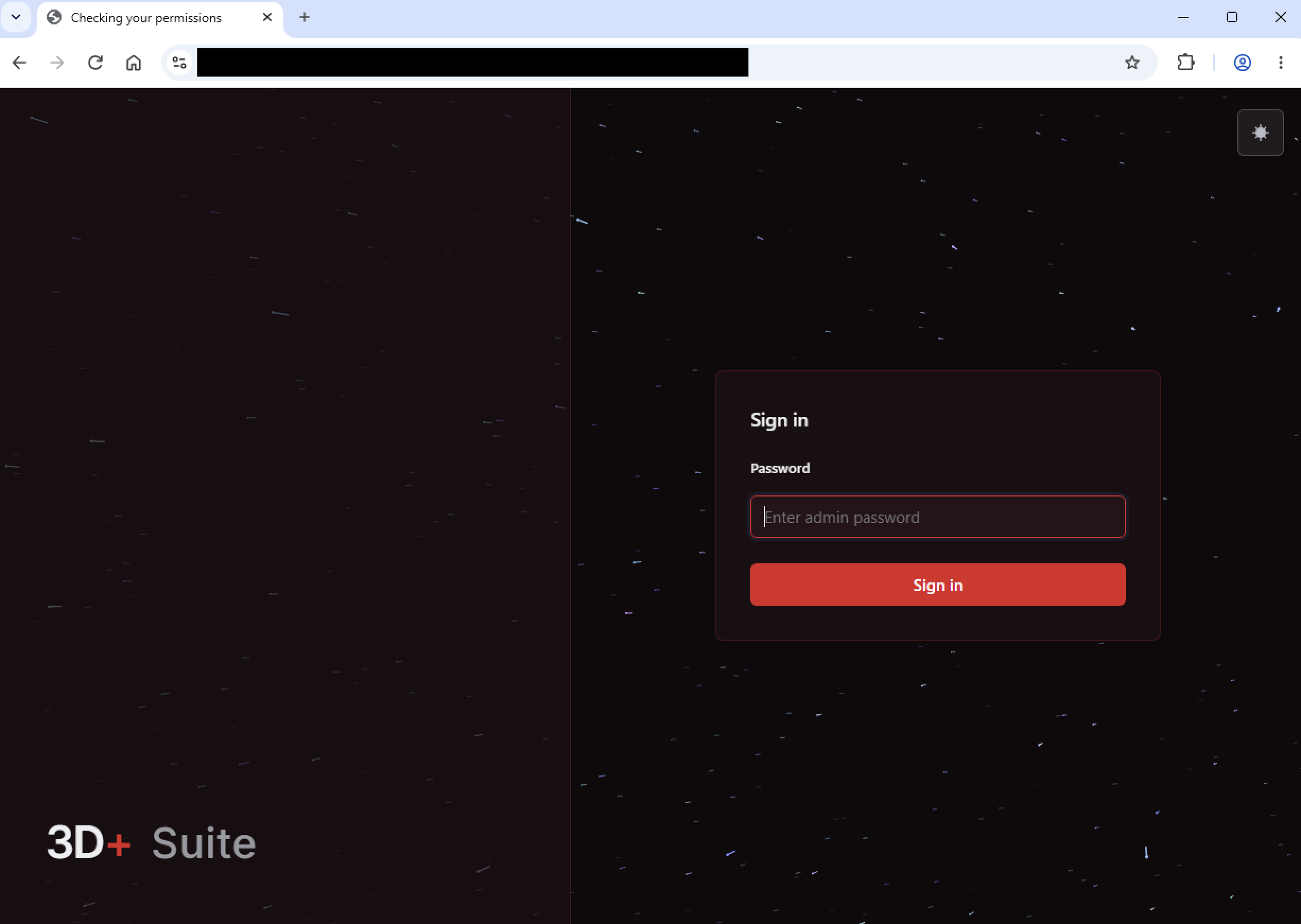
3D+ Suite admin panel